
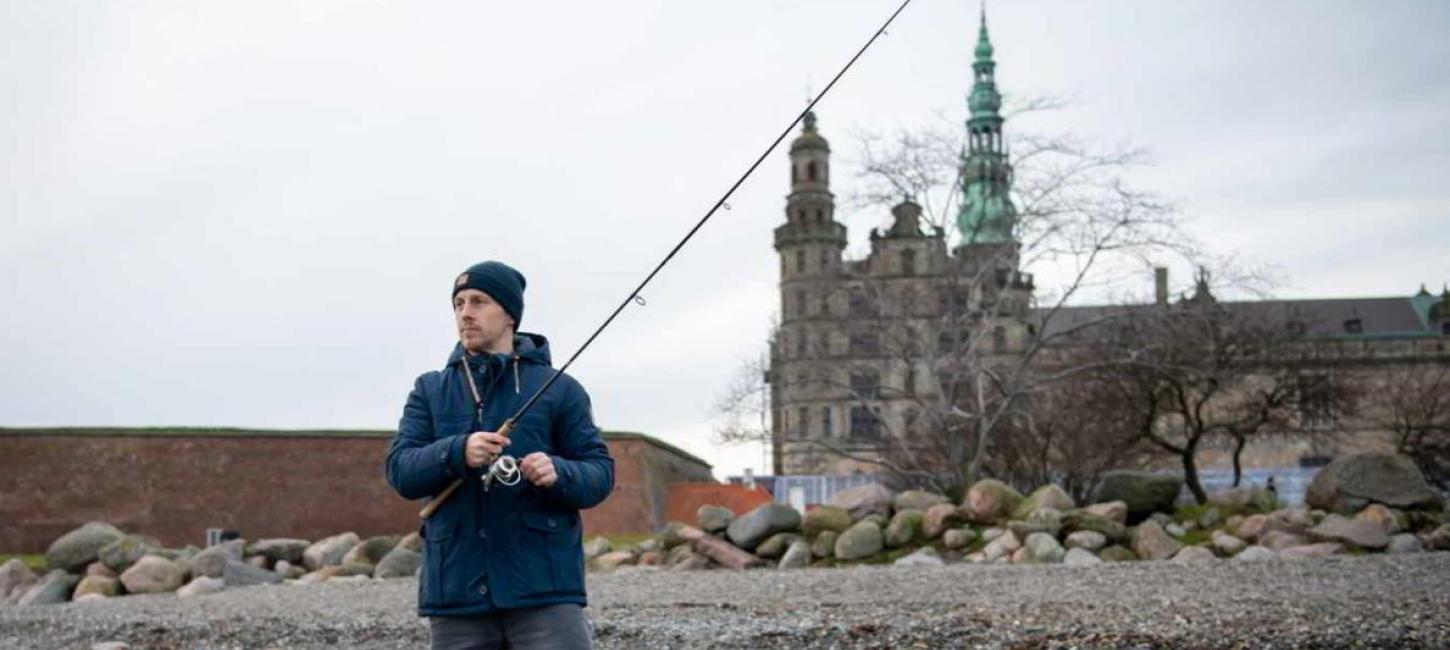
Sea trout fishing in North Zealand
Photo: Tine Uffelmann
The North Coast is known for having beautiful scenery, often harsh weather, and large sea trout. Fishing here is not always easy, but the rewards can be great. Although there are many fish here, you should prepare to cast many lines. But there’s a lot you can do to enhance your chances.
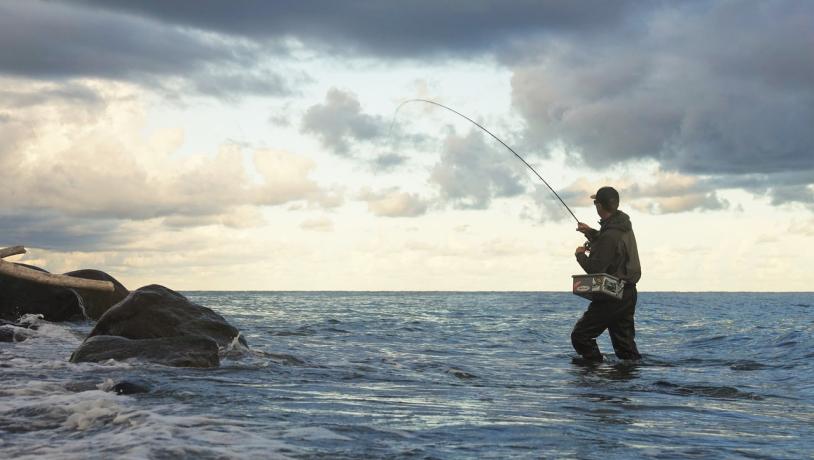
Photo: Fishing Denmark
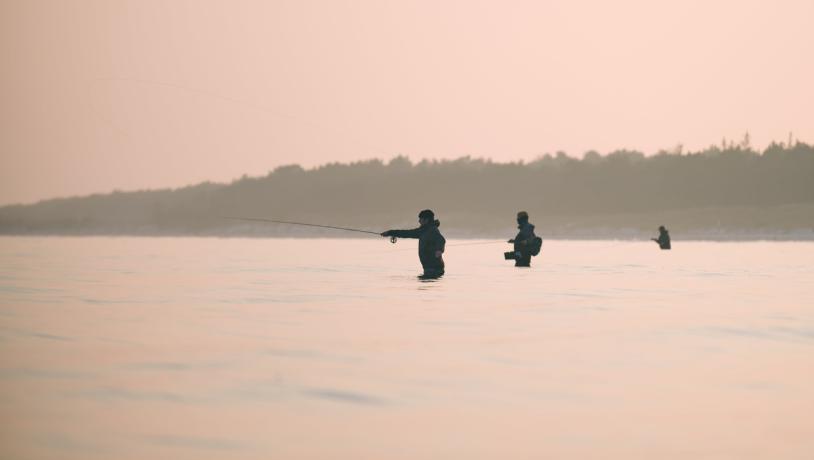
Photo: Fishing Denmark
Rules
When fishing for sea trout in Denmark there are some things you must keep in mind. From 16 November until 15 January all coloured sea trout are under conservation regulations. That means that you can only take home silvery fish with loose scales. The minimum size for sea trout is 40 cm, so if you catch a sea trout measuring under 40 cm, you must return it to the water as gently as possible. You do so by getting it into the boat quickly, not squeezing it tightly when you remove the hook and always having a hook remover handy. This reduces handling time. If you are between the ages of 18 and 65 you must obtain a fishing licence, which you can buy by clicking this link.
Please note that there are conservation belts on the North Coast. You can find them by clicking the map.
When to catch sea trout?
The best times to catch sea trout are in the spring and autumn. During the spring, many sea trout have just arrived from the rivers after having spawned, and the water temperature is starting to rise. This makes the sea trout hungry and the chance of catching a large silvery sea trout is best at this time. Autumn is also a popular time, as the fish are beginning to gather in shoals and migrate to the rivers. If you find fish, keep fishing in the same spot as you may be fortunate enough to catch even more.
Fishing gear for sea trout fishing is quite simple and most fishing gear can be used. If you’re an angler you can use the following:
- Spinning rod between 270-300 cm with appropriate reel
- Woven line in 0.12-0.17 mm or nylon line in 0.23-0.25 mm
- Lures, wobblers or bombarda casting weights
Fishing techniques
The North Coast is known for having deep water close to the coastline and this brings large prey closer to land. That’s why lures and wobblers can work incredibly well. For instance, lures like Snurrebassen and the wobbler Savage Gear Line Thru 3D Sandeel have proven extremely popular on the North Coast. Both bait were developed for Danish fishing conditions. What makes these two popular are their spinstop qualities. Spinstop means that when you reel in, you insert a brief stop into the process. That causes the bait to fall towards the bottom and it’s often when you get it moving again that the sea trout will bite. It shouldn’t hit the bottom, but should only be stopped for one second. It’s an excellent that experienced sea trout fishers use every time they go out.
Bombarda fishing is another highly effective technique that gives you the opportunity to cover more water with the fly. Bombarda between 20-30 g are optimum. You can use a float, but the most popular are the ones that sink slowly. You can of course adjust the speed on the day, but in late spring and all of autumn, fast retrieval is a very good idea. Just like with lures, spinstop can be very effective here. Flies like Pattegrisen, Kobberbassen and Grå Frede are excellent spring and autumn flies, while Polar Magnus and Pink Fluer are great when the water is a bit colder during the winter months and in early spring.
The three expert tips
- The more water you fish in, the more fish you’ll catch
- If you don’t catch anything, change your lure, wobbler or fly
- Don’t go far out into the water, the fish often come in close to land
Fishing tackle for sea trout fishing is fairly simple, and most fishing gear can be used for this type of fishing. If you are a spin fisher, you can use the following equipment:
|
Fishing methods
The North Coast is known for having deep water close to shore, which brings larger prey species in near land. This is why spoons and coastal wobblers can be incredibly effective. For example, lures such as the spoon Snurrebassen and the coastal wobbler Savage Gear Line Thru 3D Sandeel have proven to be very popular along the North Coast. Both lures were developed specifically for Danish fishing conditions. What makes these two so popular is their performance during a spin stop.
A spin stop means that while retrieving your lure, you make a brief pause along the way. This causes the lure to sink slightly toward the bottom, and it is often when you start retrieving again that the sea trout strikes. The lure doesn’t need to hit the bottom — just a one-second pause is enough. It’s a very effective trick that experienced sea trout anglers use on every single trip.
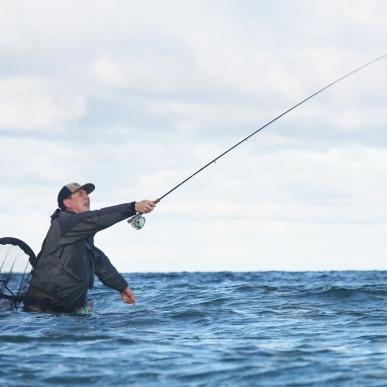
Bombarda fishing is also highly effective. It allows you to cast a fly far out from the shore. Bombardas weighing between 20 and 30 g are ideal. Floating versions can be used, but the most popular are slow-sinking models. You should, of course, adjust the retrieve speed to the conditions on the day, but in late spring and throughout autumn, a fast retrieve can work very well. Just like with spoons, spin stops can again be extremely effective.
Flies such as Pattegrisen, Kobberbassen, and Grå Frede are great choices for spring and autumn, while Polar Magnus and pink flies work well when the water is colder during the winter months and early spring.
Three expert tips
|
Selected fishing spots for sea trout fishing
|