
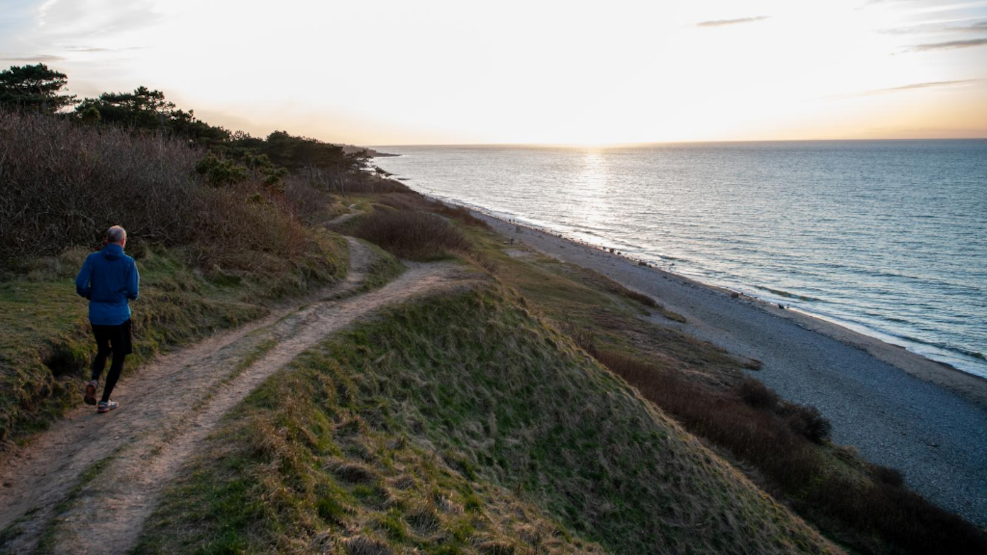
Gilbjerg Hoved – Where Coastal Cliffs Meet Cultural Heritage
Gilbjerg Hoved is a unique natural area in North Zealand where dramatic coastal landscapes blend with cultural history. Experience a place shaped by geology, flora, and philosophy.
A Protected Area with Rare Coastal Vegetation
Gilbjerg Hoved lies just west of Gilleleje, between residential areas and the summer cottages. The area includes 25 hectares of protected land and a further 40 hectares designated as an EU habitat site due to its rare coastal vegetation.
The cliff rises up to 33 metres above the Kattegat Sea and is home to plant species found in only a few locations in Denmark. In spring, large swathes of sea thrift bloom in pale lilac hues, accompanied by salt-tolerant plants like sea plantain and scurvygrass.
Grasslands, Cliffs and a Rocky Shore
Between the cliff and Tinkerup Strandvej lies a stretch of grassland, maintained through seasonal grazing. This type of conservation prevents the area from turning into woodland and helps retain the open landscape.
Along the coast, visitors encounter a rugged shingle beach with stone groynes and coastal defences. The variety of stones reveals the area's glacial history, with rock types originating from Sweden, Norway and the Baltic region.
Søren Kierkegaard’s Legacy in the Landscape
A memorial to the Danish philosopher Søren Kierkegaard stands along the Gilbjerg path. He visited Gilleleje in 1835 and often came here to reflect. The location remains a place of quiet contemplation, with sweeping views across the sea.
Further west stands Gilbjergstenen (the Gilbjerg Stone) – a naturally shaped stone resembling a chair. From here, visitors can enjoy panoramic views of Hesselø and the Swedish peninsula of Kullaberg.
Walking Trails and Outdoor Experiences
The Gilbjerg Path connects the town of Gilleleje to Gilbjerg Hoved and continues to Tinkerup Strand. Part of National Cycle Route 47 (the North Coast Route), the 2.8 km trail follows the edge of the cliff and offers spectacular coastal scenery.
The area is also suitable for wading and shoreline fishing, making it ideal for nature lovers, geologists and those with a passion for Danish cultural heritage.